Lovelink
An emotion-aware marketplace that helps long-distance couples stay connected by transforming their moods into meaningful shared experiences
problem
When we began this project, we quickly realized that long-distance couples are not lacking communication tools. What they are missing is emotional alignment. Our interviews revealed that misunderstandings happen easily when partners cannot sense each other’s feelings, time zones interrupt emotional support, and thoughtful gestures become difficult due to high costs and unpredictable logistics. Existing platforms focus on messaging or gifting, but few address the emotional gaps created by distance. This became the central problem we wanted to solve.
solution
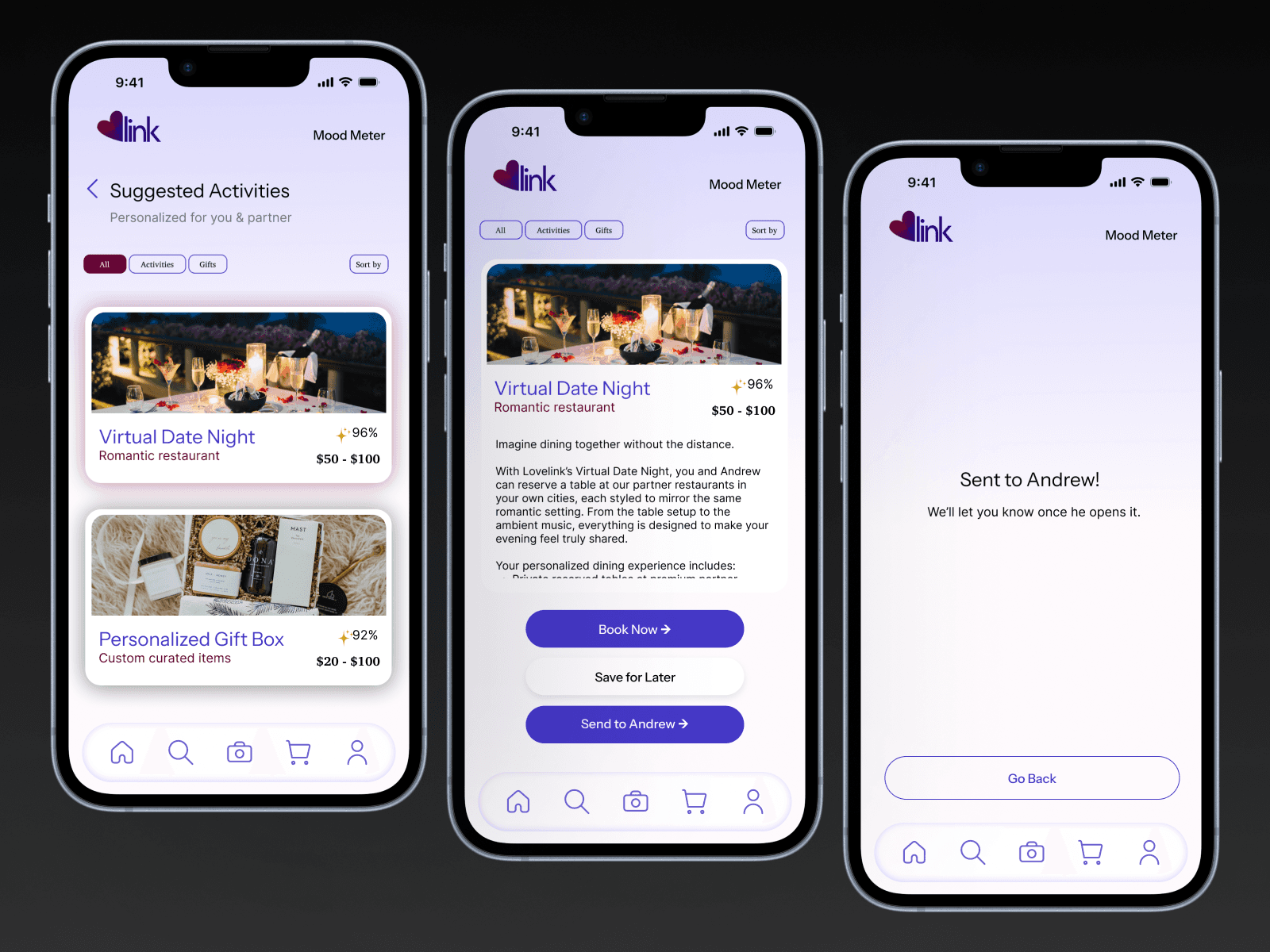
We designed LoveLink as an emotion-driven marketplace centered around mood-based recommendations. Instead of pushing products, the app adapts to how both partners feel and suggests experiences that match their emotional state. At the heart of it is the Mood Meter, a simple check-in that gives the app emotional context. This allows LoveLink to offer suggestions that feel empathetic, relevant, and often free. By blending emotional intelligence with marketplace features, we created a tool that supports genuine connection rather than transactional interactions.
Process
We began by speaking with people who had spent years navigating long-distance relationships. Their stories were honest and vulnerable. They shared how hard it was to read emotions through text, how difficult it was to coordinate conversations across time zones, and how often surprises lost their meaning when deliveries arrived late. One person told us he had made a handmade gift but never sent it because shipping was too expensive. Another explained how often they felt out of sync, unsure if their partner had the mental space to talk. These conversations revealed that the real challenge was not communication itself but the emotional disconnect that forms when partners cannot keep track of each other’s feelings.
Insights and Reframing
As we synthesized our findings, we saw that emotional misalignment was the thread running through all the pain points. Partners were not missing each other’s messages. They were missing emotional visibility. This led us to reframe our challenge as a team. How might we design a marketplace that begins with emotion instead of transactions and helps couples show up for each other in ways that match how they feel? This guiding question shaped our entire direction.
Ideation and Concept Development
We explored many ideas through mind maps, Crazy 8s, and SCAMPER exercises. We sketched concepts for shared calendars, photo streams, virtual rooms, and cross-city surprise agents. The breakthrough came when we viewed long-distance relationships as a constant exchange of emotional signals, experiences, and small gestures that all become strained by time, distance, money, and energy. Once we understood this dynamic, the idea of an emotion-aware marketplace came into focus. We wanted to build something that supported emotional closeness, even through simple or free interactions, instead of pressuring couples to spend money.
Designing the Mood Meter
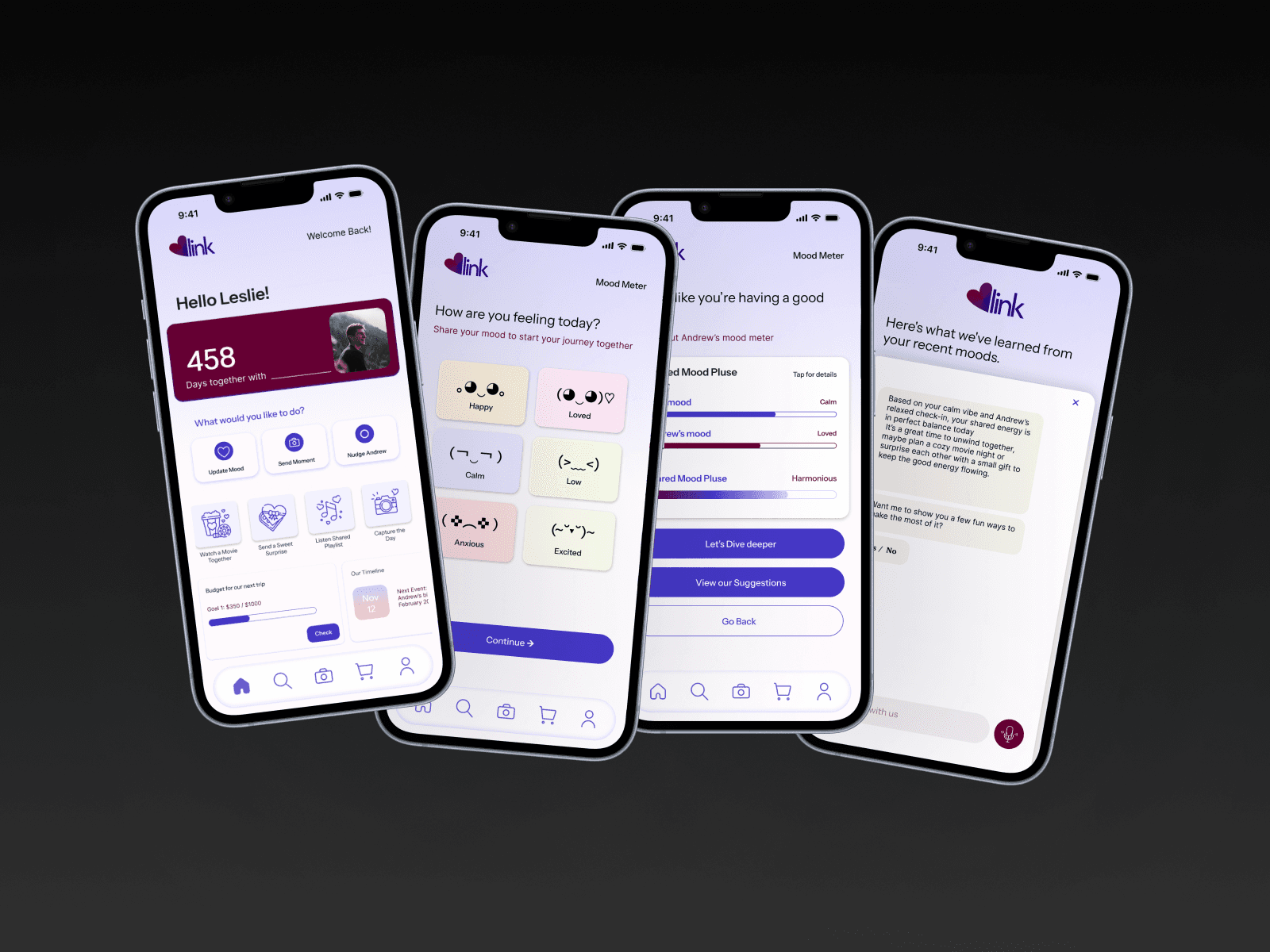
The Mood Meter became the centerpiece of our solution. Together we shaped a flow that felt gentle and accessible. A user selects how they feel, and the app blends their mood with their partner’s latest check-in. This creates a shared emotional profile for the moment and drives all recommendations that follow. The insights are written in a warm, supportive tone, and the marketplace suggestions shift based on the couple’s emotional energy. Low-energy moods lead to calming or low-effort activities, while high-energy moods surface fun date ideas or curated gift options. The mood mechanic allowed us to design a marketplace guided by empathy instead of transactions.
Task Flows and Experience Architecture
We designed the main happy path around emotional pacing. The flow gently moves from reflection to insight to action without overwhelming the user. It encourages intentional connection rather than impulsive choices. Instead of showing a long list of products or experiences, the marketplace offers only what feels emotionally appropriate in that moment. Couples in our testing appreciated how personal and relieving this felt compared to traditional e-commerce patterns.
Building the Design System
To ensure consistency and emotional warmth, we created a design system that centered on softness and calm. We selected a palette of lavender, rose, and subtle gradients to evoke closeness and comfort. Typography and components were designed with rounded forms, generous spacing, and gentle transitions. Everything from the icons to the layout patterns was built to make the experience feel reassuring and emotionally grounded.
High-Fidelity Prototype
In the final prototype, the entire experience came together in a cohesive and intentional flow. The dashboard welcomes users into a shared space. The Mood Meter encourages honest emotional check-ins. The insights page offers supportive interpretations. The marketplace provides a thoughtful blend of free and paid experiences. Finally, the sending flow completes the emotional loop with a simple confirmation that mirrors the feeling of sending a meaningful gesture.
Outcomes and Learnings
Even though this was an academic project, users responded strongly to LoveLink’s emotional sensitivity. Many mentioned that the recommendations felt accurate and comforting. Several couples appreciated the free suggestions, saying it reduced the pressure to spend money while still helping them stay connected. The project validated our belief that emotional intelligence can transform a marketplace into something far more meaningful.
Reflection
This project was shaped by collective creativity. Each member brought different strengths, perspectives, and cultural insights that enriched the final product. We aligned early on the vision that our marketplace needed to prioritize emotion over transactions, and that shared value helped us make consistent design decisions. Working together through research, synthesis, ideation, and prototyping strengthened our collaboration and helped us build a product rooted in empathy. LoveLink reflects what we learned as a team. When designing for relationships, the smallest interactions can have the biggest emotional impact.
year
2025
timeframe
1 Month
tools
Figma
category
UX Research, Product Strategy, Visual Design
01