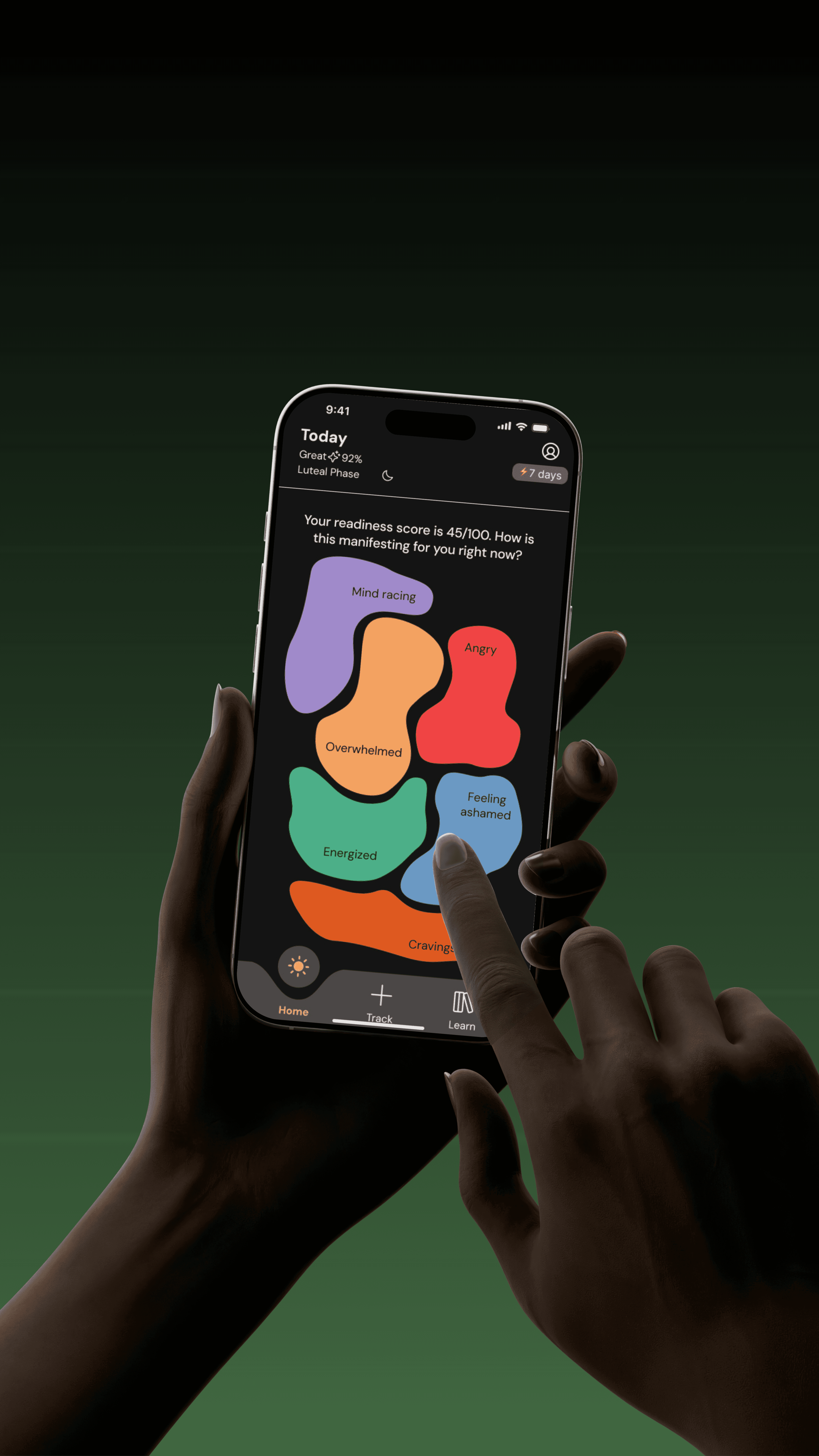
Product Design
Interaction Design
Role: UI Lead, Feature Development, User Research & Interviews
Team: Maria, Simran, Niranjana, Gopichand
Overview
Key Findings
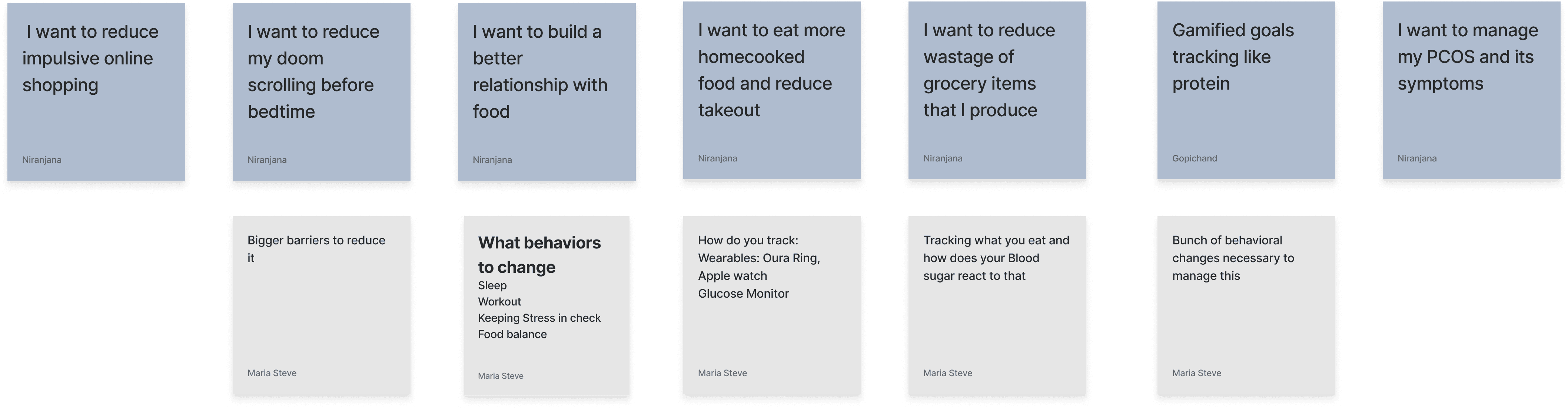
Users had to switch between separate apps for periods, calories, sleep, and symptoms—none of which communicate with each other.

The “Why” Gap: Women want to uncover the reasons behind their symptoms, not just log what happened. Judgmental tones in apps trigger anxiety, not action.
Energy Over Everything: Users prioritize understanding and managing their energy, rather than traditional goals like weight loss.
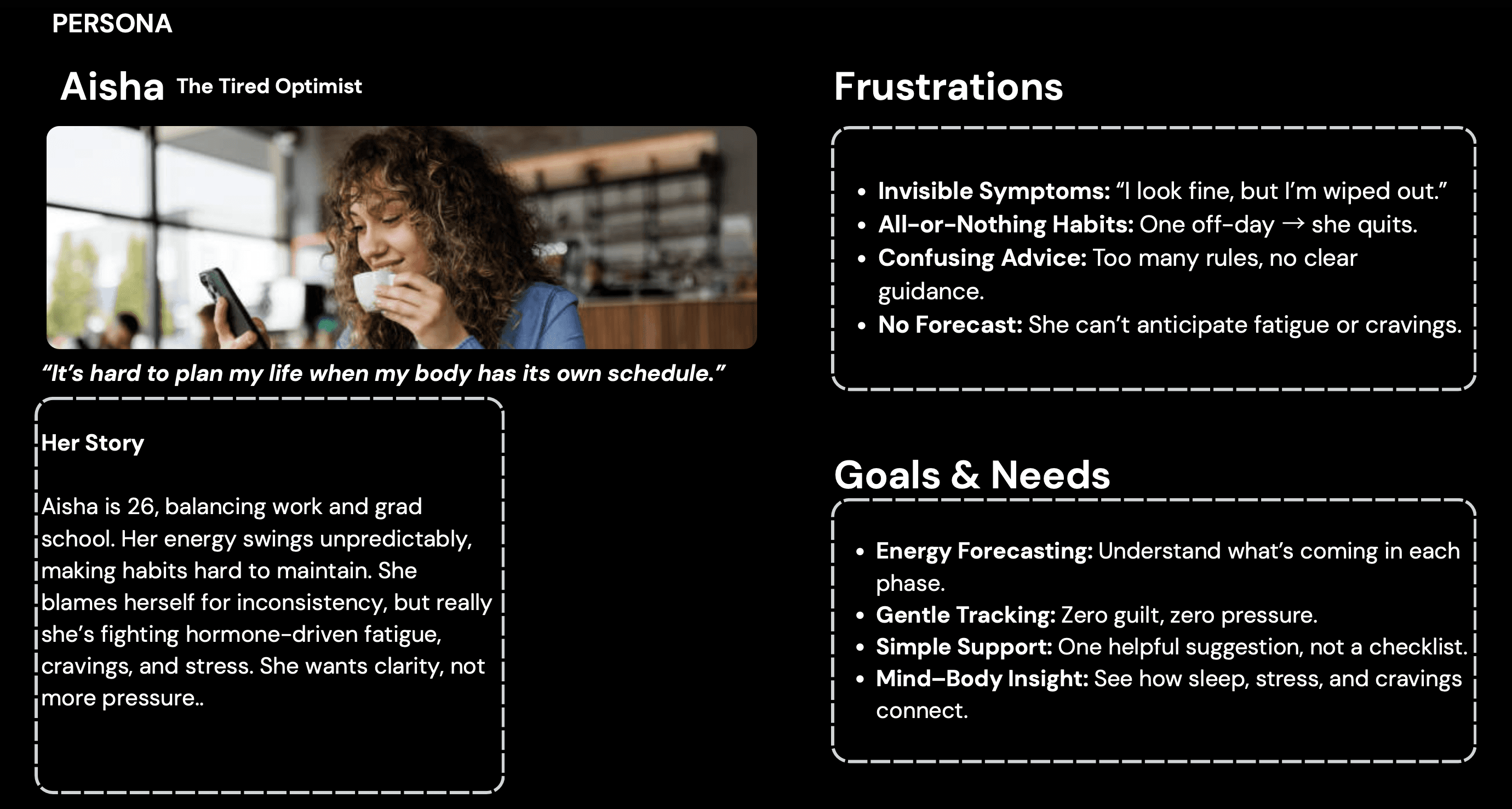
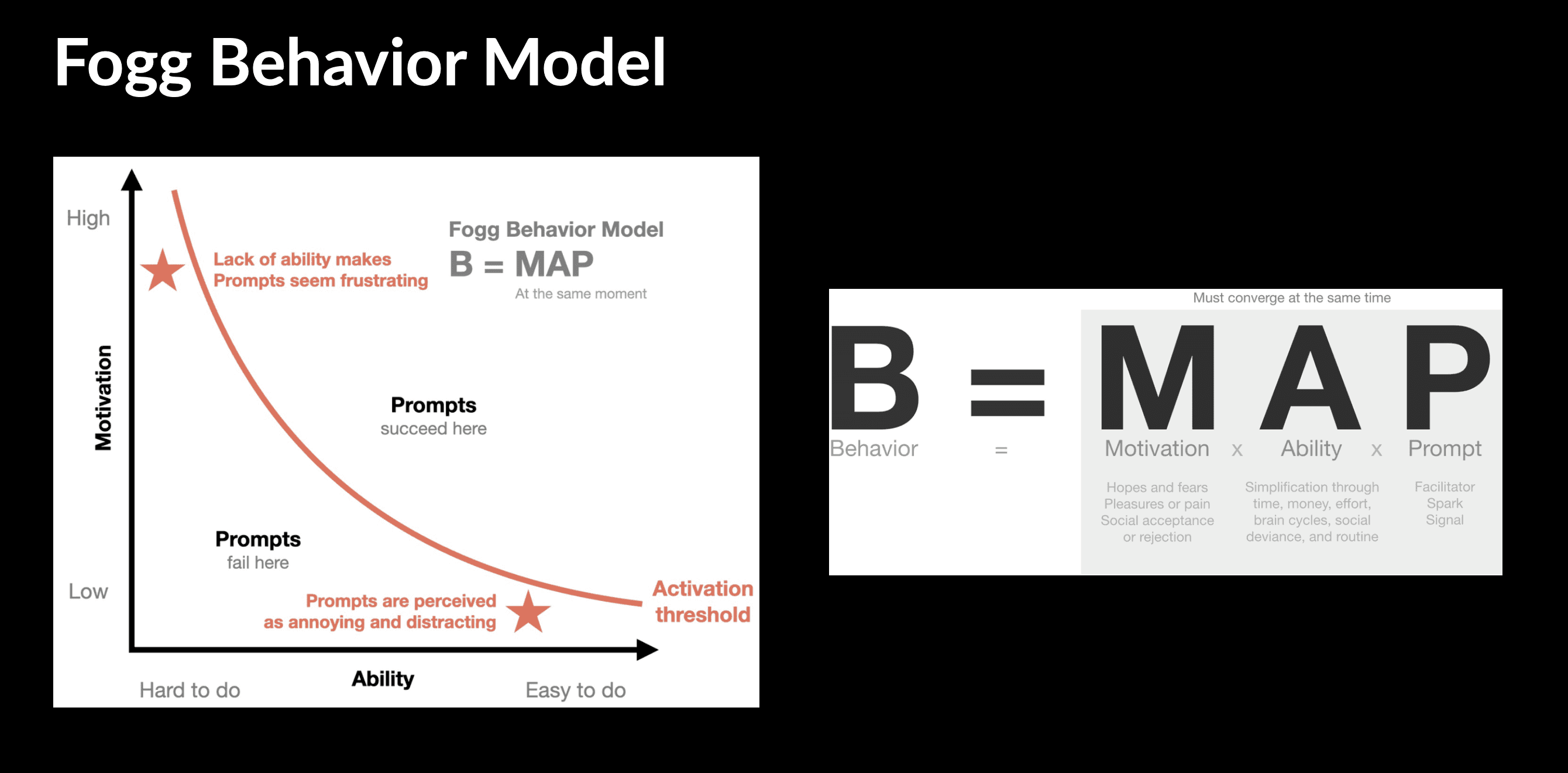
How might we help Aisha understand her body’s patterns without adding to her daily burden or guilt?
We analyzed tracking habits: users toggle between multiple apps for periods, calories, sleep, and more—none of which communicate. Tracker fatigue leads to abandonment, and manual entry becomes overwhelming. Users want to see the ‘why,’ not just the ‘what.’ Judgmental notifications create anxiety.
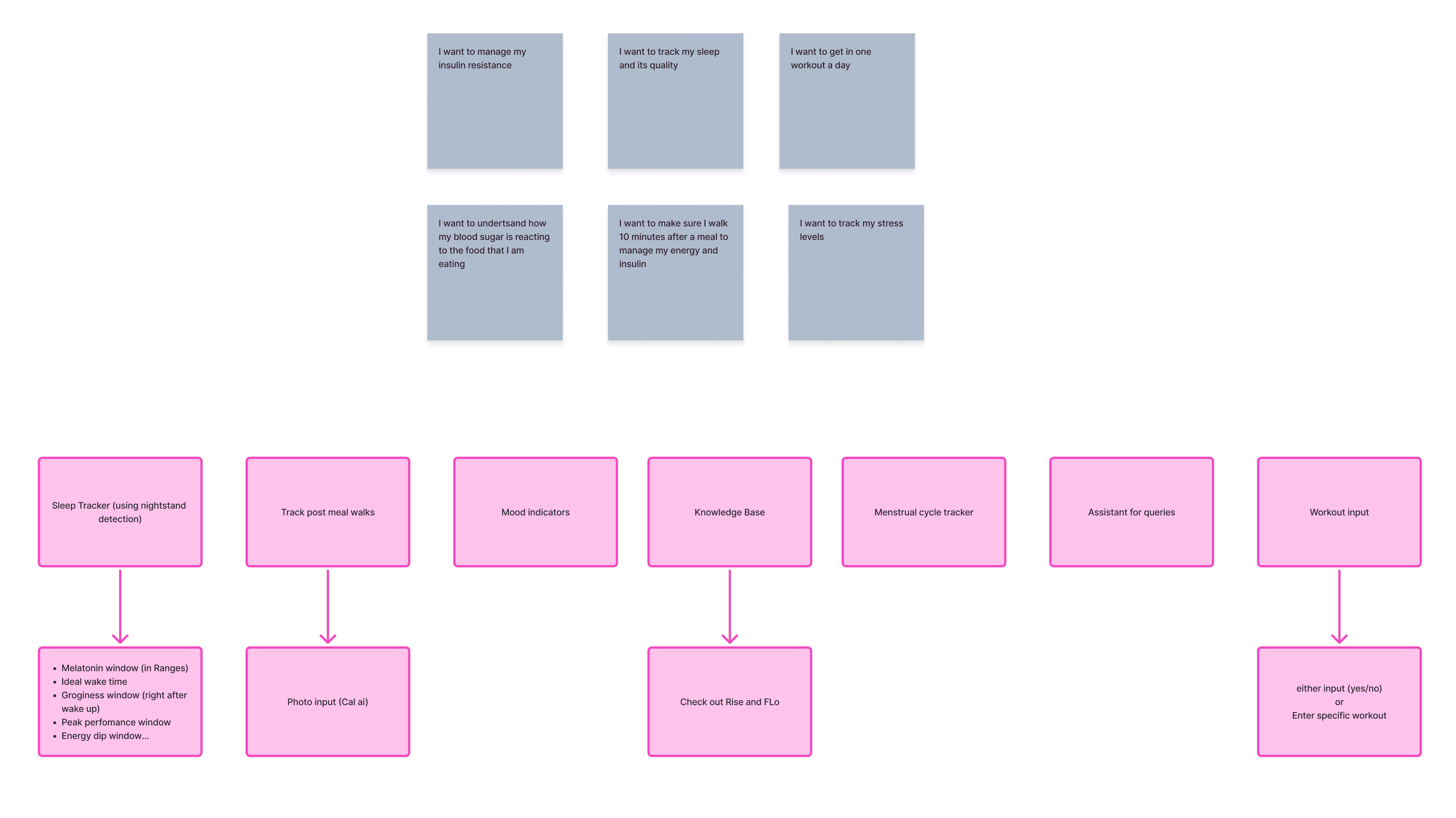
Testing & Iteration: Our wireframe testing included completing onboarding, checking the Hormonal Harmony Score, using the ‘Wired or Tired?’ widget, reviewing energy patterns, and receiving celebratory notifications. Iterations included simplifying complex data (Battery Level metaphor), introducing passive sensing from Apple Health, a one-tap ‘Wired or Tired?’ widget, and shifting to celebratory, supportive notifications.
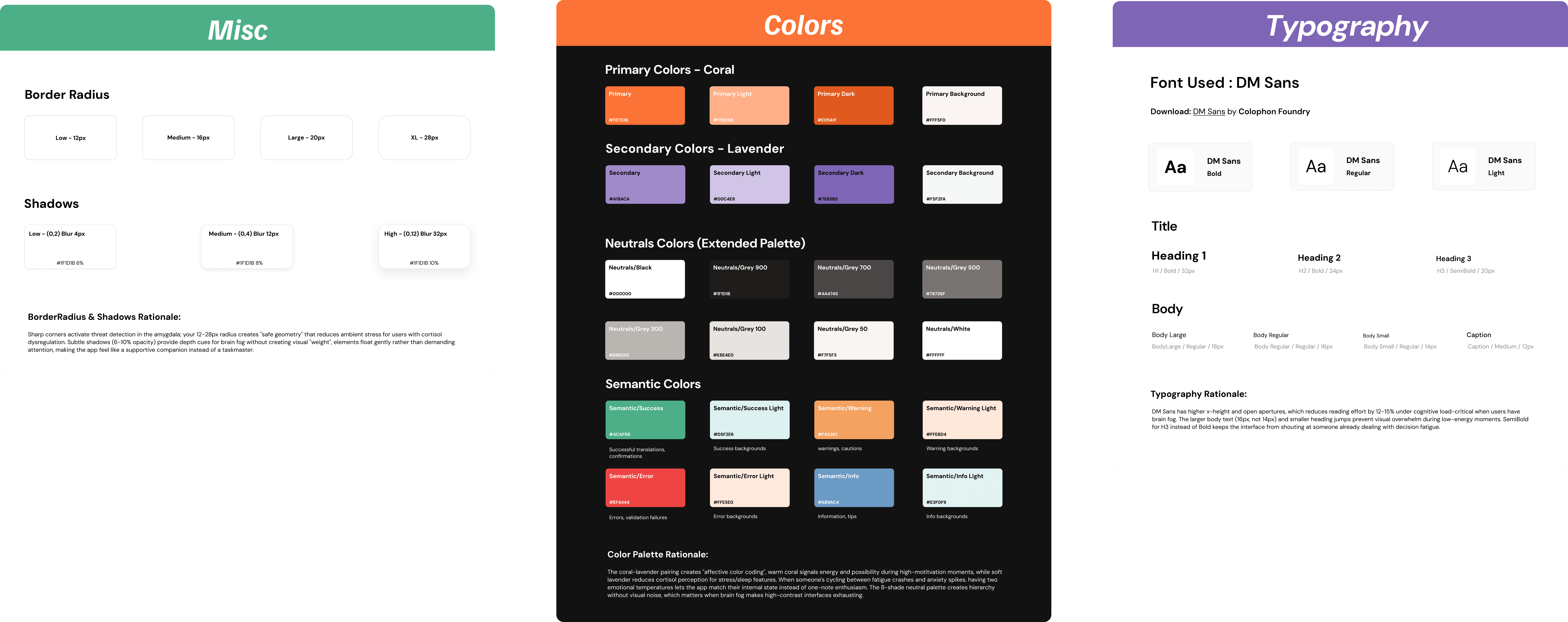
Design System
Iterations
Hormonal Harmony Score
The "Battery" for your body
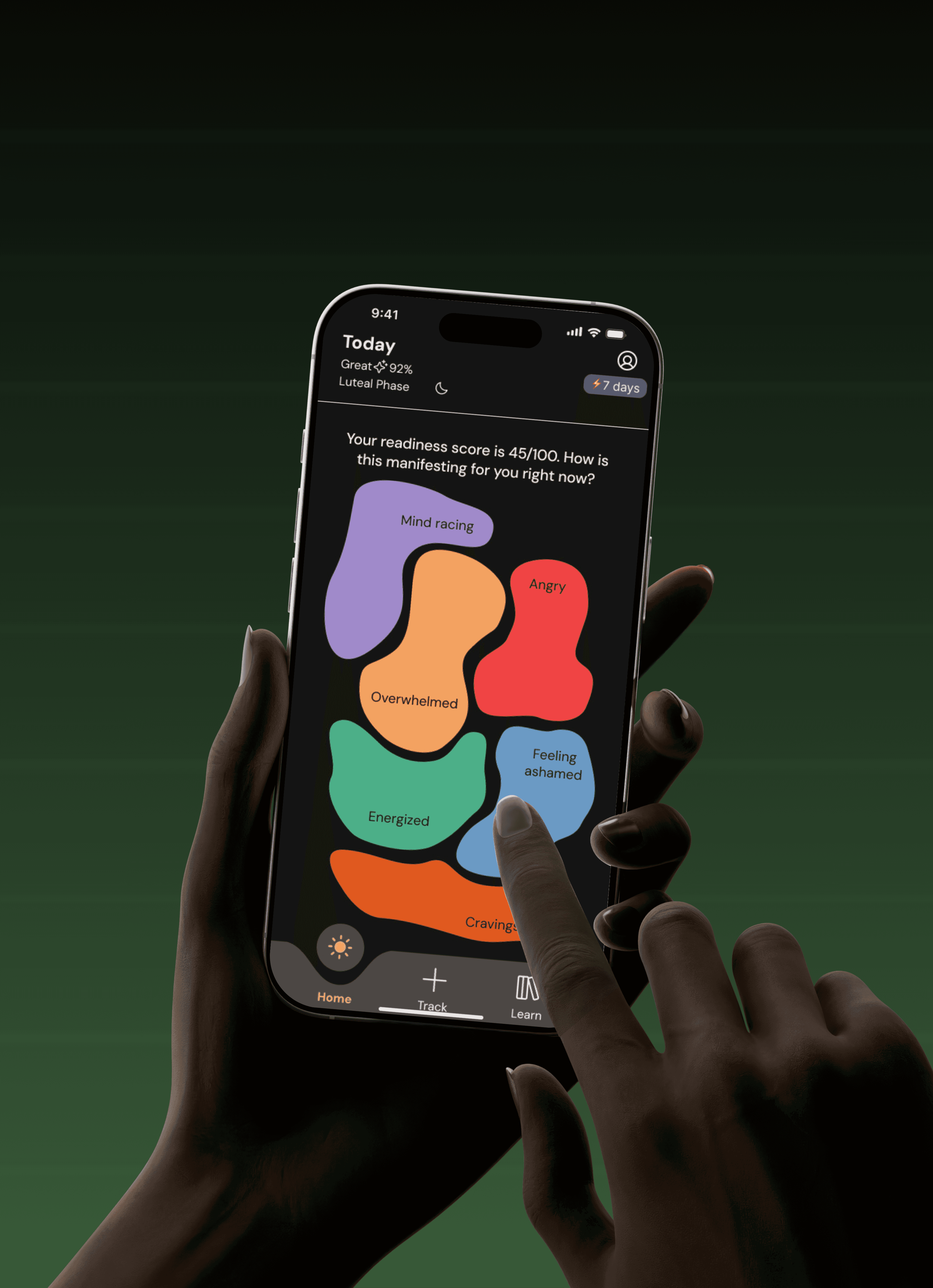
Transformed overwhelming cortisol and insulin graphs into one glanceable score: 72% Charged. Users instantly know their energy level without decoding medical data.
Your period tracker that actually explains what's happening
Log your period and get phase-specific insights mapped to seasons (Spring, Summer, Fall, Winter). Users understand what's happening in each phase—follicular, ovulation, luteal—and how to work with their body's natural rhythm instead of against it.
See the "why" behind symptoms
Shows cause-and-effect patterns: "Poor sleep → High cortisol → Sugar cravings." Users understand their bodies instead of just logging data.
"Wired or Tired?" Widget
Check-in in 2 seconds
A one-tap home screen widget replaced traditional journaling. Users report how they feel with zero friction.
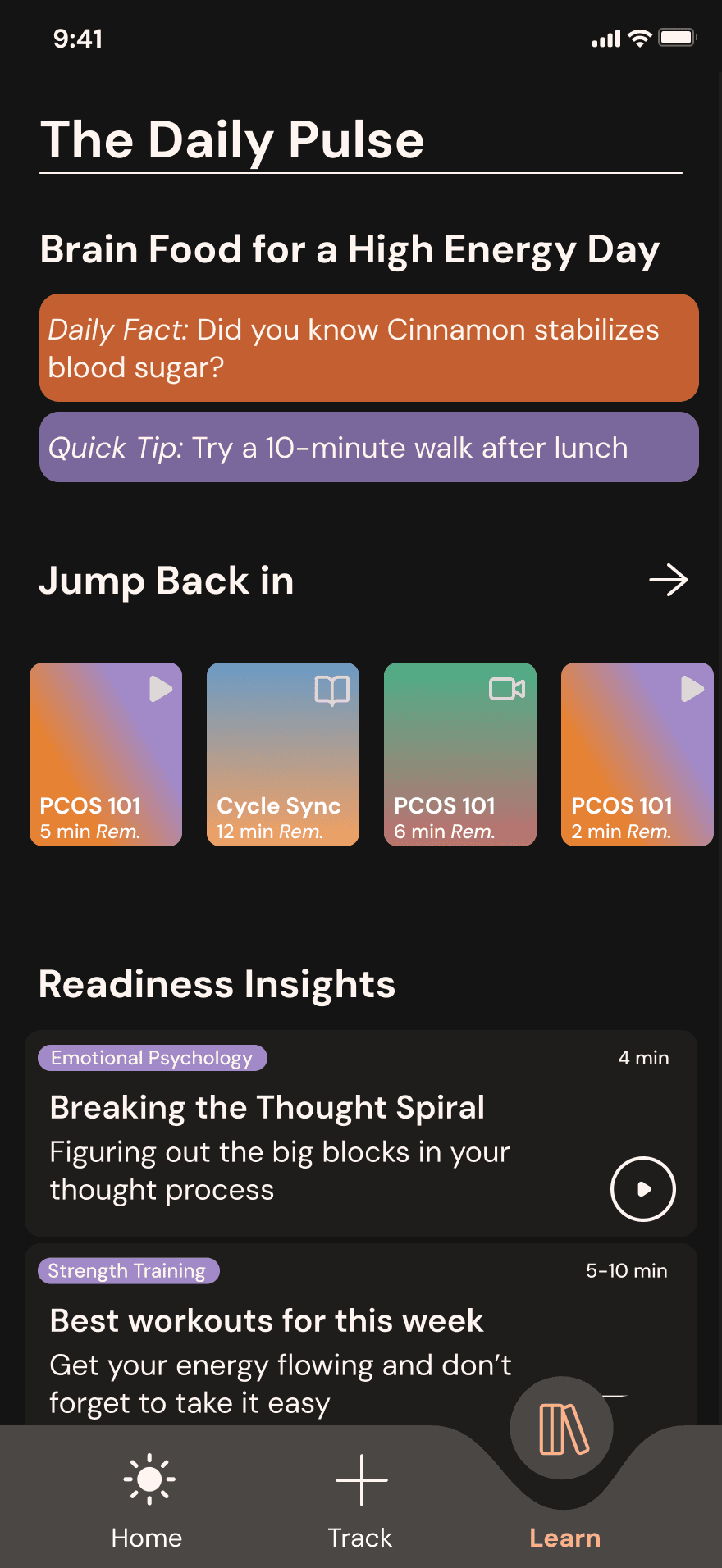
The Daily Pulse (Learn Tab)
Hyper-personalized education, not generic advice
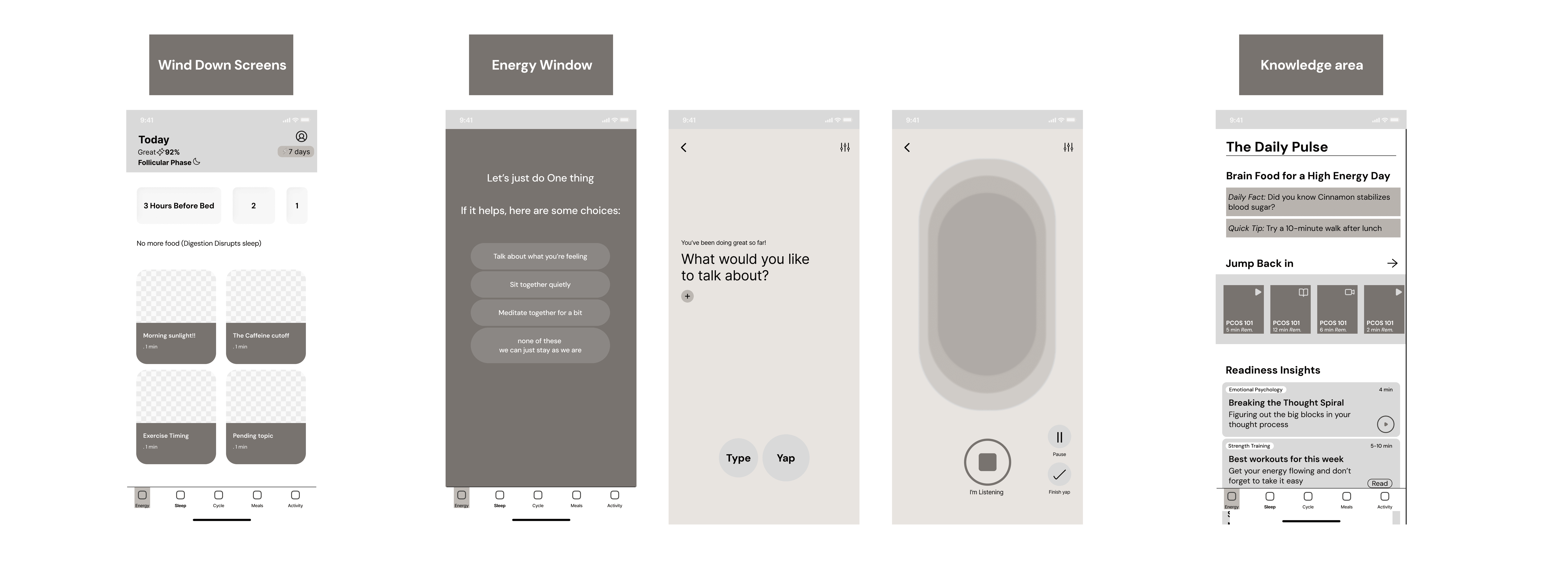
Delivers tailored tips, podcasts, and readings based on the user's current hormonal phase and energy levels. Brain food recommendations when cortisol spikes, workout suggestions when energy is optimal—guidance that adapts to what their body needs today.
Wind-Down Window
Prepare your body for better sleep
Breaks down pre-sleep routines into timed steps: what to do 3 hours, 2 hours, and 1 hour before bed. Connects digestion patterns and sleep scores to show how evening habits impact rest quality and next-day energy.
Impact & Future Scope
Impact
Eliminates tracker fatigue
One app replaces the "Frankenstein stack"—no more toggling between period trackers, calorie counters, and sleep apps.Reduces mental burden
Passive sensing means insights without the work. Users get clarity without manual data entry.Empowers understanding
Shows the "why" behind symptoms, not just that they happened. Users see they're not "lacking willpower" their bodies are responding to hormonalpatterns.
Builds sustainable habits
Guilt-free engagement through celebration, not shame. Users stay engaged because the app supports them, not judges them.
Future Scope
CGM Integration
Connect continuous glucose monitors for real-time insulin insights, especially valuable for users managing insulin resistance.Community Feature
Anonymous sharing of what worked during specific cycle phases (e.g., "Magnesium helped my luteal phase cravings").Predictive Alerts
Forecast energy crashes or craving spikes 24-48 hours in advance so users can plan accordingly.Provider Dashboard
Help endocrinologists view longitudinal patient data between appointments, making visits more productive.